
By Dee Davidson
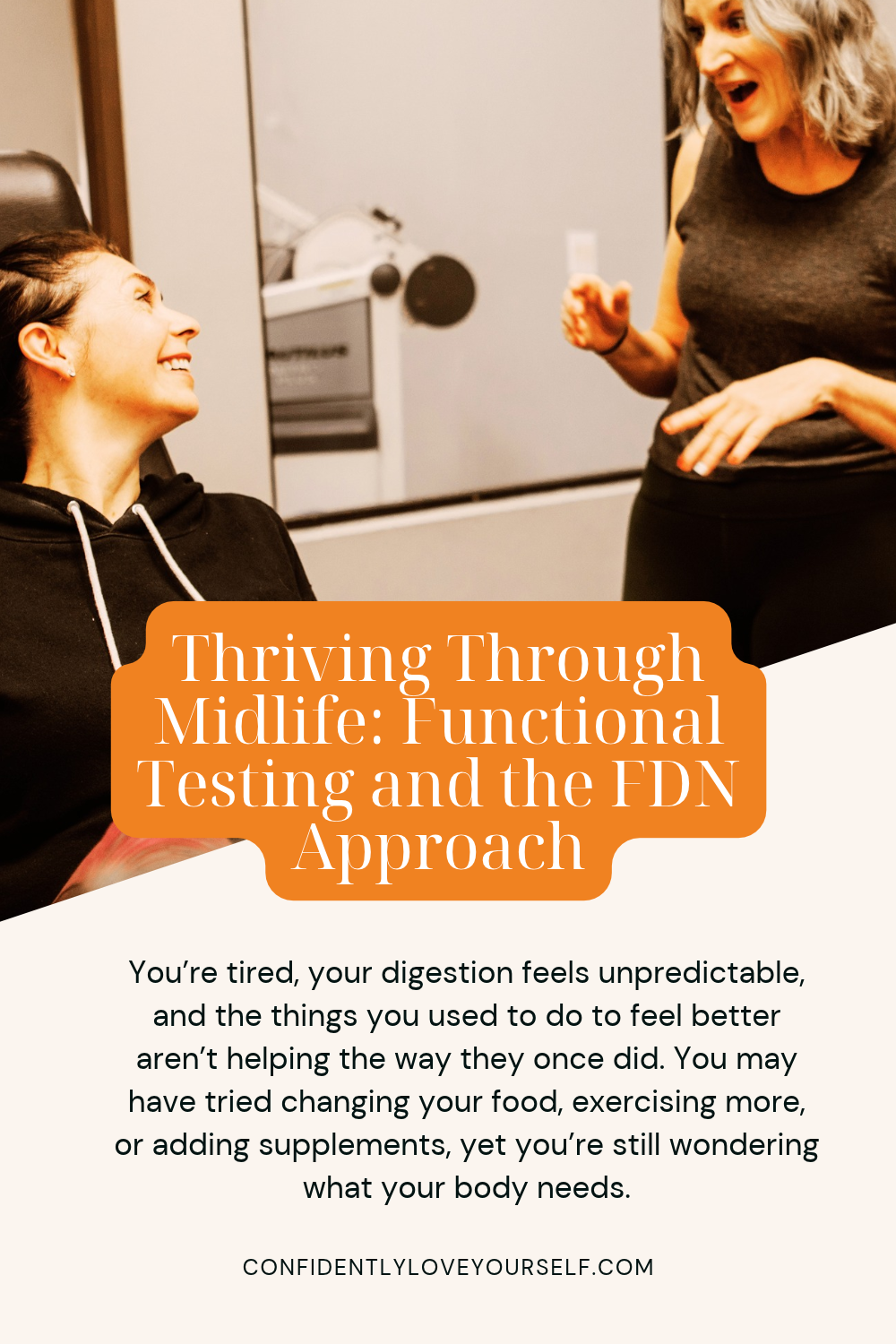
You’re tired, your digestion feels unpredictable, and the things you used to do to feel better aren’t helping the way they once did. You may have tried changing your food, exercising more, or adding supplements, yet you’re still wondering what your body needs.
This is where I encourage you to pause and look at the bigger picture.
As a Functional Health Practitioner, I use the FDN approach to consider how your daily habits, health history, stress, symptoms, and relevant testing fit together. My goal is to help you make informed choices and build a foundation that supports your whole health.
Thriving through midlife takes attention, curiosity, and a willingness to care for yourself consistently.
What is the FDN approach?
Functional Diagnostic Nutrition is a framework for looking at patterns that may be contributing to how you feel. It brings together health history, lifestyle assessment, selected lab testing, and personalized support.
In my practice, that means making room for your story. What was happening when your symptoms began? How are you sleeping? Are you eating regularly? What responsibilities are you carrying? What have you already tried?
Your answers matter. They provide context that numbers on a report cannot give us by themselves.
I also consider how the body’s systems interact. Hormones, digestion, immune function, energy production, and the nervous system influence one another. Looking at those connections can help us identify useful questions and decide where to focus.
Testing with intention
“Test, don’t guess” is an important part of my work, but it doesn’t mean everyone needs every test.
Before recommending testing, I want to know what question we are trying to answer and how the results could influence your next steps. Depending on your concerns, we may discuss bloodwork or selected stool, urine, saliva, or hair testing.
Each test has a particular purpose and limitations. Hair mineral results, for example, cannot independently diagnose a nutrient deficiency or tell us how well your thyroid or adrenal glands are functioning. Results need to be interpreted within the broader picture, with medical evaluation when appropriate.
Functional testing can contribute information. It becomes more useful when we connect it to your symptoms, history, medications, nutrition, and daily life.
Then comes the practical question: What will you do with what you learn?
D.R.E.S.S.: Bringing the information into everyday life
The FDN framework uses D.R.E.S.S. to organize five areas of lifestyle support: Diet, Rest, Exercise, Stress Reduction, and Supplementation.
These areas give us a structure for turning information into manageable actions.
Diet: Nourish your individual needs
Food is one of the most consistent ways you care for yourself.
We look at whether you are eating enough, eating regularly, and choosing meals that satisfy you. We also consider your preferences, digestive tolerance, schedule, budget, and health needs.
For one person, the first step may be preparing lunch so she stops skipping it between meetings. For another, it may be adding more variety or working with a qualified clinician to address a specific dietary concern.
The aim is a sustainable way of eating that supports you and fits your life.
Rest: Make room for recovery
You can spend a full night in bed and still feel depleted. We look at sleep routines, evening habits, opportunities for downtime, and anything that may need further investigation.
Sometimes practical changes help, such as keeping a more consistent bedtime or protecting a quieter period before sleep. Persistent exhaustion, snoring, or waking unrefreshed also deserves a conversation with your medical provider.
Rest includes giving yourself permission to stop doing long enough to recover.
Exercise: Choose movement you can sustain
Movement should be matched to your capacity, goals, and current health.
Strength training, walking, mobility work, and activities you enjoy can all have a place. We consider how you feel during and after exercise and whether your routine leaves enough room for recovery.
Consistency becomes easier when movement is something you can realistically repeat. The starting point may be smaller than you expected, and that is still a starting point.
Stress reduction: Look at the load you carry
Stress includes more than a crowded calendar. It can involve caregiving, relationship strain, financial pressure, grief, or the habit of putting your own needs last.
We identify what is within your control and where additional support could help. That may include boundaries, breaks, time outdoors, a calming breathing practice, or support from a mental health professional.
I often ask clients to consider what they need to feel more supported in their daily lives. A plan is easier to follow when it acknowledges the circumstances you are living in.
Supplementation: Be purposeful
Before adding a supplement, I want to understand why you are considering it, what you already take, and whether it is appropriate for your needs.
We review the purpose of each recommendation, possible interactions, and how we will decide whether it is helping. Your prescribing clinician or pharmacist may need to be involved, especially when you take medications.
Supplements can be one part of a plan. They work within the context of your food, rest, movement, and overall care.
Why personalization matters
Two women may both report fatigue and need different next steps.
One may be eating inconsistently and sleeping too little. Another may need medical evaluation for anemia, thyroid disease, sleep apnea, or another condition. Both deserve to have their concerns taken seriously.
This is why I avoid treating a symptom as a complete explanation. I want to understand what has been evaluated, what remains uncertain, and what holistic support is appropriate.
The FDN approach helps me organize that conversation and work alongside the care you receive from your healthcare providers.
From understanding to action
A long list of recommendations can feel overwhelming. Together, we prioritize.
What would make the greatest practical difference right now? What feels manageable? What needs professional evaluation? What support would help you follow through?
You may begin with a nourishing breakfast, a scheduled follow-up appointment, or a boundary that protects your sleep. As you learn more, your plan can evolve.
Thriving through midlife is personal. It may mean having more energy for your family, feeling clearer at work, understanding your digestion, or rebuilding confidence in how you care for yourself.
My role is to help you connect the pieces and take thoughtful steps toward those goals.
Ready to look at your whole health?
If you are tired of piecing together advice and wondering where to begin, a discovery session is an opportunity to discuss your concerns, your goals, and whether my approach would be a good fit.
Visit confidentlyloveyourself.com to learn more and connect.
Your story matters. Your needs deserve attention. It is your birthright to thrive.
This article is for educational purposes and does not replace individualized medical advice or evaluation.
Medical Disclaimer: This article is for educational and wellness purposes only and is not intended to diagnose, treat, cure, or prevent disease or replace individualized medical care. Supplements are not appropriate for everyone and may interact with medications or medical conditions. HTMA cannot diagnose mineral deficiencies, thyroid disease, blood sugar disorders, nervous system disorders, toxicity, or other medical conditions. Vitamin D status is best evaluated with appropriate blood testing when indicated. Consult your physician or qualified healthcare provider regarding supplements, testing, or significant changes to your health routine.