
How HTMA Can Support PCOS: A Missing Piece in Hormone Healing
By Dee Davidson, FDN-P
If you’ve been diagnosed with PCOS (Polycystic Ovary Syndrome), chances are you’ve been told some version of this:
“Balance your hormones.”
“Manage blood sugar.”
“Reduce stress.”
While all of that matters, it often leaves women feeling frustrated and confused — because no one explains how to do those things in a way that actually works for your body.
This is where Hair Tissue Mineral Analysis (HTMA) can be a powerful and often overlooked tool.
Why PCOS Is More Than Just a Hormone Problem
PCOS is not a one-size-fits-all condition. It can show up differently in every woman, but underneath the symptoms we often see patterns involving:
Blood sugar dysregulation
Insulin resistance
Chronic stress and adrenal strain
Inflammation
Poor detoxification
Nutrient and mineral imbalances
Hormones don’t operate in isolation. They respond to the terrain of the body — minerals, stress chemistry, metabolic function, and nervous system balance.
HTMA helps us look at that terrain.
What Is HTMA?
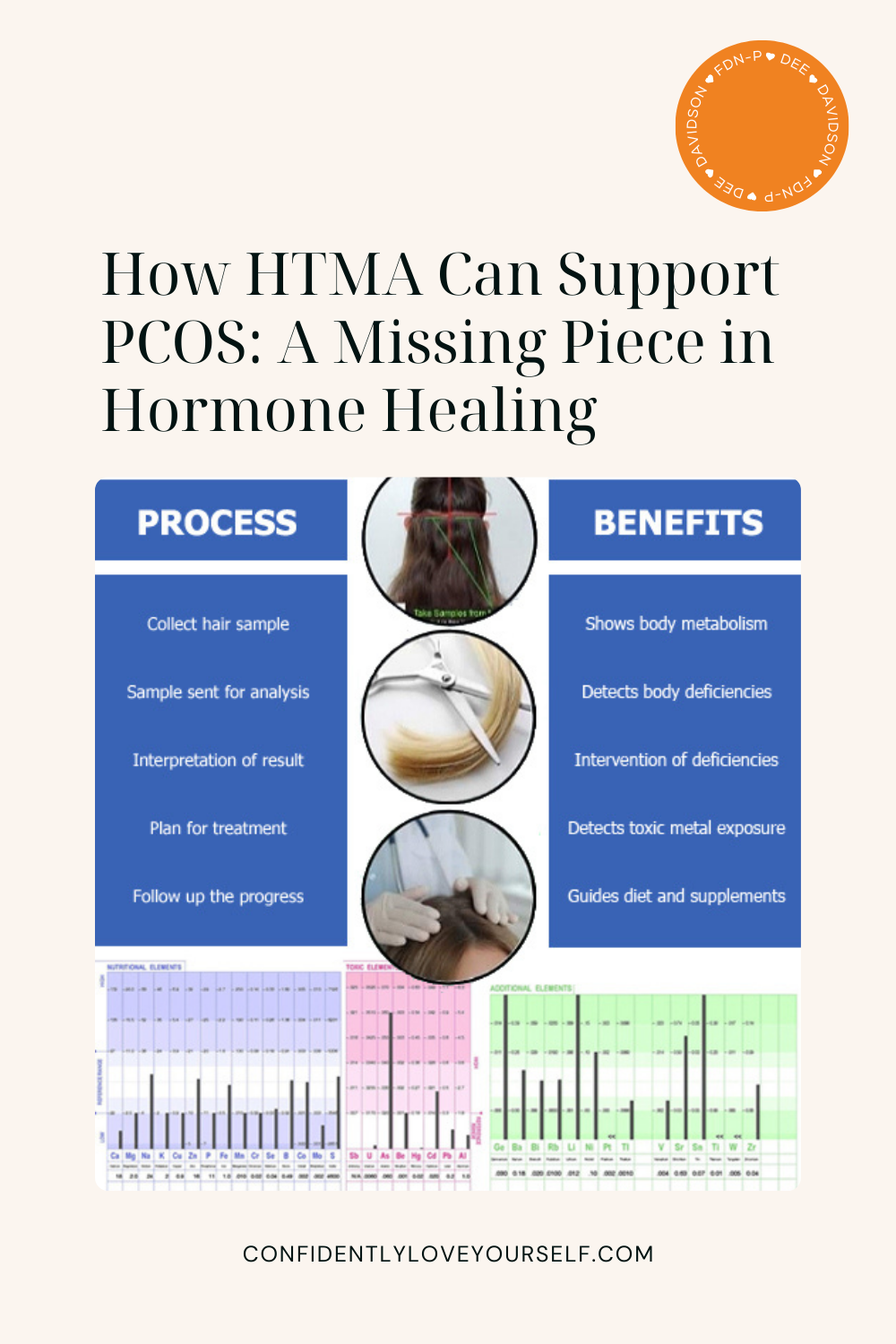
Hair Tissue Mineral Analysis is a non-invasive lab test that measures mineral levels and mineral ratios using a small sample of hair.
Unlike blood work, which shows what’s happening in the moment, HTMA reflects patterns over time — often the last 2–3 months — making it especially helpful for chronic conditions like PCOS.
It gives us insight into:
Mineral deficiencies or excesses
Stress patterns
Blood sugar tendencies
Adrenal and thyroid stress
Detox capacity
Inflammatory patterns
Think of minerals as the spark plugs of the body. When they’re out of balance, systems like hormones, metabolism, and energy production can’t function optimally.
Why HTMA Is So Helpful for PCOS
1. Blood Sugar & Insulin Clues
Many women with PCOS struggle with insulin resistance — even if standard labs appear “normal.”
HTMA can reveal mineral patterns (like chromium, magnesium, calcium, sodium, and potassium ratios) that suggest:
Blood sugar instability
Reactive hypoglycemia
Stress-driven insulin dysregulation
This helps us tailor nutrition and lifestyle support specifically to your metabolic needs.
2. Stress & Adrenal Load
Chronic stress plays a huge role in PCOS, even when you don’t feel stressed.
HTMA shows how your body is responding to stress physiologically, including:
Burnout patterns
Fight-or-flight dominance
Poor stress recovery
When stress chemistry is addressed, hormones often begin to regulate more naturally.
3. Androgen & DHT Support
Excess androgen symptoms (acne, hair growth, hair loss) are common in PCOS.
Mineral imbalances can influence:
Testosterone conversion
DHT activity
Liver detoxification of hormones
HTMA allows us to support these pathways gently, instead of forcing the body with aggressive protocols.
4. Detox & Estrogen Clearance
Poor detoxification can worsen hormone symptoms in PCOS.
HTMA can highlight:
Sluggish liver pathways
Mineral depletion from detox overload
Inflammatory stress that blocks hormone clearance
Supporting detox doesn’t mean harsh cleanses — it means restoring capacity.
Why HTMA Feels So Much Easier Than Other Tests
One of the biggest reasons women love HTMA is how simple it is.
No needles
No fasting
No appointments
No stool collection
No hormone timing
You simply cut a small hair sample at home and mail it in.
That’s it.
For women already overwhelmed by symptoms, this ease matters.
How to Order HTMA
HTMA must be ordered and interpreted by a trained practitioner to ensure accuracy and personalized recommendations. Order HERE
When you order through my practice:
You receive clear instructions for collection
Your results are reviewed through a functional lens
You get education, not fear-based interpretations
Support is tailored to your stress, hormones, and metabolism
This is not about “fixing” PCOS overnight.
It’s about understanding your body and supporting it in a way it can actually respond to.
The Bottom Line
PCOS isn’t just a diagnosis — it’s a signal.
A signal that your body needs:
Better mineral support
Reduced physiological stress
Personalized nutrition
Gentle, consistent care
HTMA helps uncover the hidden stressors keeping your body stuck so we can stop guessing and start healing.
If you’re ready for a clearer, calmer, more personalized approach to PCOS, HTMA is a beautiful place to begin.
About Dee Davidson, FDN-P
Dee Davidson is a Board-Certified Functional Health Practitioner, hormone and thyroid specialist, and the creator of the Confidently Balance Your Hormones podcast. She helps women in midlife and beyond uncover the root causes of fatigue, weight gain, anxiety, gut issues, and hormonal imbalances using functional labs, science-backed strategies, and nervous system regulation.
Dee’s work centers around empowering women to finally feel safe, seen, supported, and confident in their bodies — without restriction, overwhelm, or confusion.